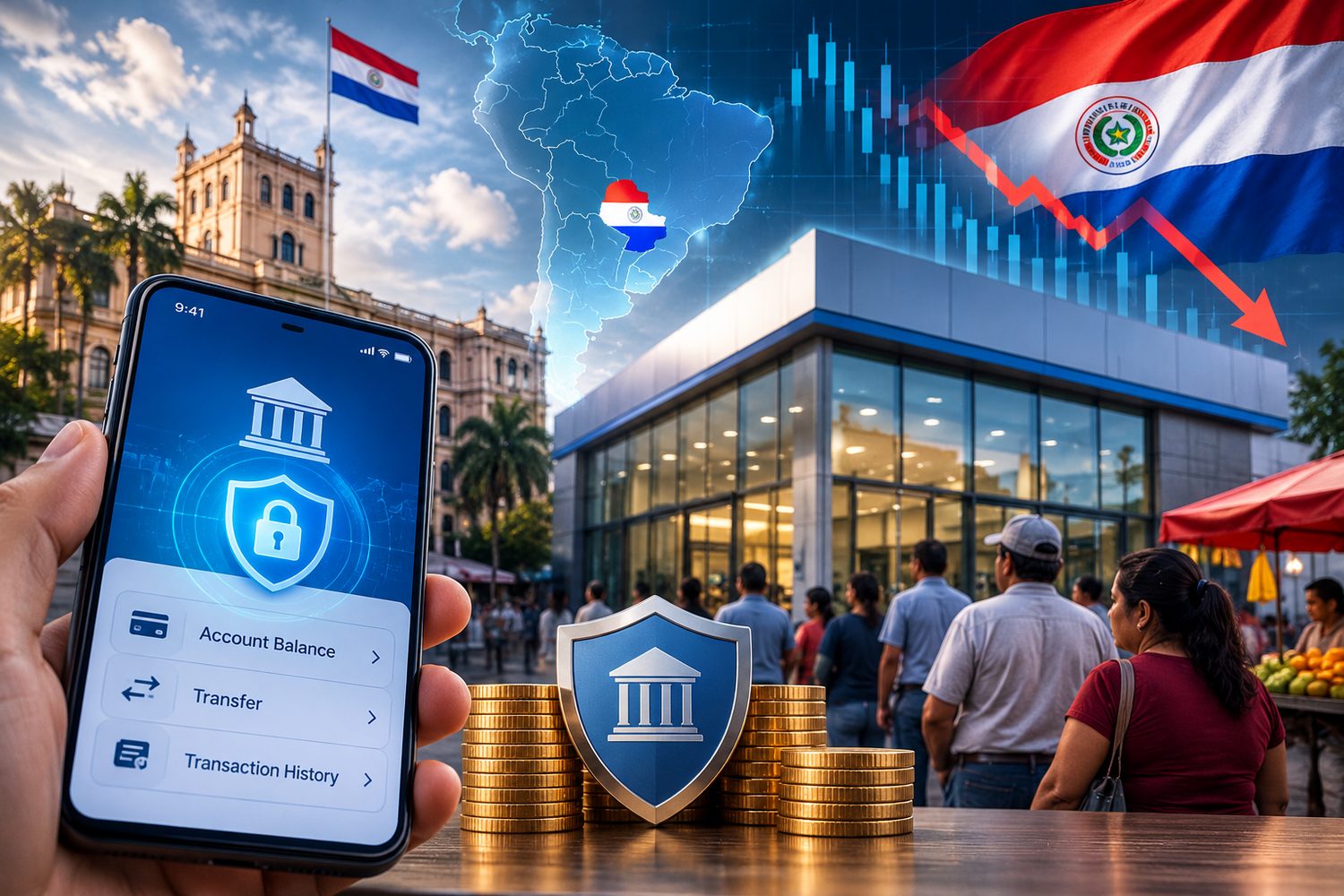
Paraguay’s Ueno Bank Crisis: Digital Banking, Depositors and Political Fallout

Global Finance | Economy Earth Planet | 11 November 2026
The Ueno Bank crisis in Paraguay has become a warning about the risks that can accompany rapid digital banking growth. After regulators found the lender’s solvency ratio had fallen far below the required minimum, Paraguay’s central bank placed the bank into a resolution process. The move temporarily cut off millions of customers from their accounts and helped trigger a political crisis.
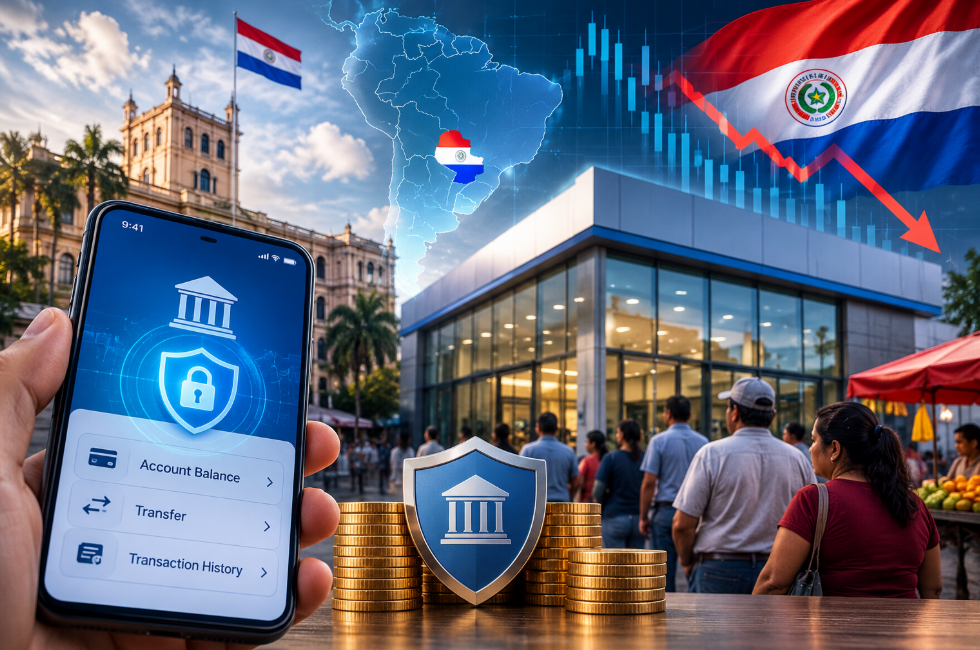
What triggered the Ueno Bank crisis?
On 3 November 2026, the Central Bank of Paraguay announced that it had started a resolution process for Ueno Bank. The regulator said adjustments made to the bank’s financial statements during a regularisation process had left its solvency ratio below half the required minimum.
The decision was not announced as a cyberattack or a hacker breach. Regulators focused on the bank’s financial condition and the need to protect depositors. The central bank said the process would allow officials to verify the bank’s assets and take steps under the country’s deposit-guarantee law.
Ueno had grown quickly from a fintech company launched in 2021 into a major digital lender. It reported around three million customers in a country of about 6.5 million people. Its app and payment services helped many small businesses, informal workers and people with limited access to traditional banking move money more easily.
That rapid growth made the bank important to everyday commerce. It also meant that the failure affected a large share of the population. Customers temporarily lost access to their accounts while officials worked on reimbursements and the transfer of banking services.
Loans to connected companies raise questions
Regulatory scrutiny had focused on loans to companies linked to the bank’s controlling shareholder, Grupo Vázquez. Reports alleged that the lender had extended excessive credit to connected businesses. Authorities are examining the bank’s financial position and the decisions that led to the intervention.
These allegations are not the same as a final finding of criminal wrongdoing. Investigators still need to establish who approved particular transactions, whether the loans complied with applicable rules and whether any individual broke the law.
The case highlights a basic banking principle: lenders must assess borrowers carefully, limit exposure to related parties and keep enough capital to absorb losses. Rapid customer growth cannot compensate for weak lending standards or inadequate risk controls.
Why the crisis became a political scandal
The fallout quickly spread beyond banking. President Santiago Peña had previously held business ties to Grupo Vázquez, although he said he sold his stake in March 2025. He denied wrongdoing. Critics questioned whether those connections created a conflict of interest and whether regulators had supervised the bank adequately.
The crisis intensified after Carlos Carvallo resigned as central bank chief. Carvallo had previously led Ueno before taking the regulator’s top job. Lawmakers and opposition figures questioned whether the bank had received sufficient scrutiny as it expanded.
Political pressure then escalated. Reuters reported that Peña was removed from office through impeachment and that prosecutors charged him and other figures in connection with the crisis. Peña denies wrongdoing. Charges and allegations must not be treated as convictions; the legal process will determine individual responsibility.
The case has raised a wider question about the independence of financial regulators. Investors and depositors need confidence that supervisors can act on financial risks even when a bank has influential business or political connections.
Depositors and small businesses feel the impact
Ueno’s digital services had become part of daily life for many small merchants. At Asunción’s Mercado 4, vendors used its terminals to accept payments and transfer money. When the bank entered resolution, some traders returned to cash or searched for alternative banks. That shift made transactions harder and, for some sellers, increased concerns about theft and personal safety.
The disruption shows why access to a bank account is not just a financial statistic. Small businesses rely on dependable payments to buy stock, pay suppliers and receive money from customers. When an account becomes inaccessible, even a solvent business can face a short-term cash-flow problem.
The crisis also affected pension-related and public funds held at the bank. Those exposures have increased concern about the quality of oversight and the need to protect money intended for workers and retirees.
Will customers get their money back?
Paraguay’s deposit-guarantee system provides coverage up to a statutory limit for eligible deposits. The central bank began payments in stages, starting with qualifying customers who held deposits of up to 10 million guaraníes, had no debt to the bank and had an account at another financial institution.
By 11 November, Reuters reported that the new president, Pedro Alliana, said about 95% of depositors had received reimbursement, with remaining payments expected to follow. That figure describes the reported progress of the guarantee process; it does not mean every customer has necessarily recovered every amount held at Ueno. Coverage limits and eligibility rules matter, especially for larger balances and institutional funds.
Depositors should follow instructions from the Central Bank of Paraguay and rely on official communications. They should be wary of anyone offering to accelerate reimbursement in exchange for fees, passwords or one-time security codes.
Could the crisis damage Paraguay’s investment reputation?
Paraguay has sought to attract foreign investment by presenting itself as a stable and business-friendly economy. A bank failure involving questions about connected lending and political oversight can complicate that message. Investors will watch whether authorities publish clear findings, apply the law consistently and protect depositors without weakening public finances.
The central bank has described Ueno as an isolated case rather than evidence of a system-wide banking problem. Even so, the wider effect will depend on how transparently officials handle the resolution and how quickly trust returns.
For digital banks worldwide, the lesson is straightforward. Convenient apps and fast customer acquisition can widen financial inclusion, but they must sit on top of sound lending, sufficient capital, independent oversight and clear contingency plans. Digital delivery changes how customers use a bank; it does not remove the basic risks of banking.
What to watch next
Investigators must clarify the bank’s financial position, assess connected lending and determine whether any officials or executives violated the law. Regulators also need to explain how the deposit-guarantee process will handle customers whose balances exceed the statutory limit and how public and pension funds will be protected.
The Ueno Bank crisis in Paraguay is therefore more than a story about a digital lender. It is a test of consumer protection, regulatory independence and political accountability. The outcome will influence not only affected customers, but also how investors judge Paraguay’s financial institutions and how other countries regulate fast-growing digital banks.
For more international economic reporting, visit Economy Earth Planet