Global Stock Market Turmoil: Why Investors Are Becoming Nervous About the Future

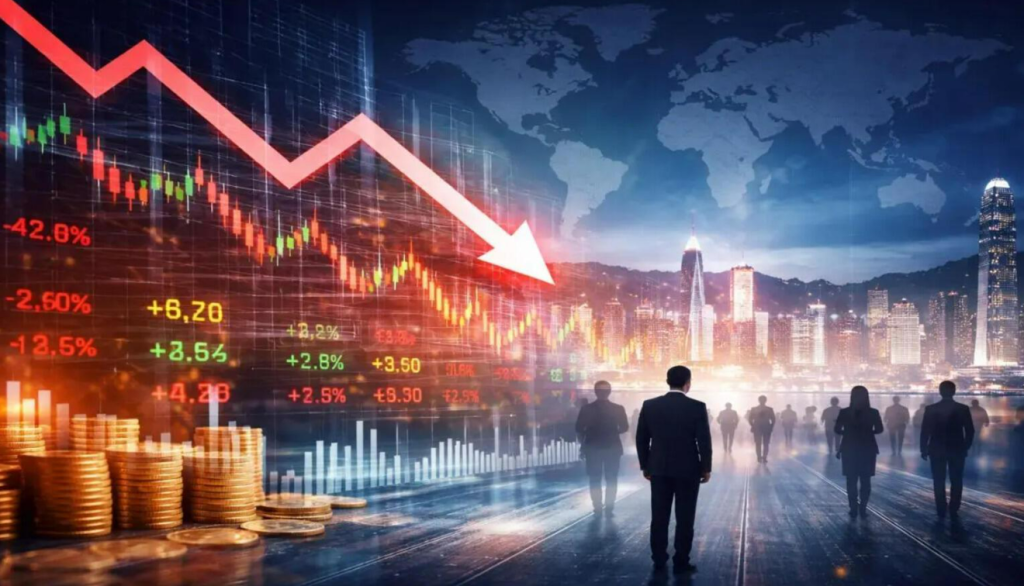
Investors are entering the final stretch of 2026 with a more cautious view of global stock markets. After months in which optimism about artificial intelligence, strong corporate earnings and resilient economic activity supported share prices, a sharp technology-led selloff has reminded markets that confidence can change quickly. The latest turbulence does not automatically signal a global financial crisis. It does, however, expose how concentrated market leadership, ambitious valuations and leverage can turn a change in expectations into a wider bout of volatility.
On November 11, Reuters reported that a recent shake-out had left technology and AI stocks roughly 10% below their early-October highs. Although prices had begun to stabilise, analysts said it was too early to conclude that the market had reached a durable bottom. The selloff followed concern about the scale of AI infrastructure spending, the timing of returns, project delays and the possibility that investor expectations had moved ahead of near-term business results.
The International Monetary Fund’s October 2026 Global Financial Stability Report offers a broader explanation for investor unease. It says markets have remained resilient, supported by economic growth and strong corporate earnings, but identifies three risks that could trigger market stress: a correction in AI-related assets, a sharper rise in government bond yields and cyber incidents that disrupt financial services. The central message is important: resilience should not be mistaken for immunity.
Why Market Confidence Can Change So Quickly
Stock prices reflect expectations about future profits, not simply the current condition of a company. When investors believe revenue and earnings will grow rapidly, they may be willing to pay a higher price today. But if new information suggests growth will be slower, more expensive or less profitable than expected, valuations can fall even when the underlying business remains viable.
This is why market selloffs can appear disproportionate to the news that triggers them. A disappointing forecast, delayed project or change in interest-rate expectations may cause investors to reassess years of projected earnings. When many portfolios hold similar companies, the same reassessment can prompt simultaneous selling and magnify price movements.
Recent weakness has also been shaped by positioning. When a popular investment theme attracts large inflows, many investors can end up exposed to the same trade. If sentiment turns, selling pressure may become self-reinforcing as funds reduce risk, options hedges are adjusted and leveraged positions are unwound. Market structure can amplify a common change in mood.
The AI Boom: Powerful Growth Story, Concentrated Risk
Artificial intelligence has become a major driver of corporate investment and stock-market enthusiasm. Companies are spending heavily on data centres, advanced chips, networking equipment, power systems and software. Investors have rewarded firms they believe will supply the infrastructure or capture productivity gains from AI adoption.
The opportunity is substantial. AI tools may help businesses automate routine tasks, improve research, optimise logistics and create new products. Semiconductor manufacturers, cloud providers, data-centre operators and electricity suppliers may all benefit if demand expands. A market correction would not prove that AI is a passing fad or that the technology has no economic value.
The question is whether current investment plans and valuations assume returns that will be difficult to achieve. Building data centres requires enormous capital expenditure, reliable electricity, cooling systems and specialised chips. Revenue must eventually grow enough to justify those costs. If customers delay deployments, computing prices fall, or businesses struggle to convert AI experiments into paying products, expected returns may be revised downward.

The IMF has highlighted leverage and interconnected financing arrangements in parts of the AI ecosystem. Its October report examined 14 publicly disclosed transactions since 2023 involving approximately $300 billion in equity investments and $650 billion in debt, alongside future revenue commitments. Such structures do not automatically imply distress, but they can create dependencies: if a key company weakens, the value of investments, lending and expected purchases may all be affected at once.
For investors, the critical distinction is between the long-term potential of a technology and the price paid for exposure to it. A transformative industry can still produce poor investment returns when expectations become too optimistic or capital is deployed faster than profitable demand develops.
Interest Rates and Government Bond Yields Are Another Pressure Point
Equity markets do not operate in isolation. Government bond yields influence borrowing costs across the economy and provide a benchmark against which investors compare the potential return from stocks. When yields rise, future corporate profits are often valued less highly in today’s money. Higher yields can therefore put pressure on stock valuations, particularly for companies whose expected earnings lie far in the future.
Bond yields can rise for several reasons: persistent inflation, stronger-than-expected economic activity, concerns about government borrowing, or a reassessment of the compensation investors demand for holding long-term debt. The IMF warns that renewed inflation pressures and fiscal imbalances could lead to a sharper increase in sovereign yields. If that happens, the effect may spread beyond government bonds into corporate credit, mortgages and equity valuations.

This creates a difficult policy environment. Central banks must keep inflation expectations under control, but higher borrowing costs can weaken investment and household spending. Governments also face pressure to finance public services, defence, infrastructure and debt interest. If investors become concerned about fiscal sustainability, they may demand higher yields, increasing the cost of servicing public debt and potentially reinforcing market anxiety.
Geopolitical Tensions and Economic Uncertainty
Global stock markets are sensitive to events far beyond corporate boardrooms. Conflicts, trade restrictions, sanctions and shipping disruptions can affect energy prices, supply chains and business confidence. A rise in oil or gas prices may increase inflation while reducing disposable income available to consumers. Companies that depend on imported materials or international transport can face higher costs and weaker margins.
Geopolitical risk is difficult to price because consequences are uncertain and can change rapidly. Markets may initially react to headlines, then reverse as investors assess whether the economic impact is temporary or persistent. The IMF’s April 2026 financial stability analysis described how conflict-related energy pressures can push bond yields higher and weigh on risk assets, particularly in economies vulnerable to imported commodities and capital outflows.
For multinational companies, uncertainty can also delay investment decisions. A firm may postpone building a factory, hiring staff or entering a new market if it cannot estimate future tariffs, shipping costs or regulatory requirements. Repeated shocks can reduce productivity by encouraging duplicated supply chains and discouraging long-term cross-border investment.
How Market Stress Can Spread Beyond Stocks
A stock-market decline becomes more concerning when it affects funding conditions and the ability of financial institutions to meet obligations. Banks, pension funds, insurers, hedge funds and other investment vehicles are connected through lending, derivatives, collateral and shared holdings. When prices fall sharply, some investors may face margin calls or need to sell assets to raise cash.
Leverage can intensify this process. Borrowing allows investors to increase market exposure, but it also magnifies losses. If asset prices move against a leveraged position, investors may be forced to sell quickly. When many participants use similar strategies, those sales can push prices lower and create further demands for collateral.
The IMF has warned that vulnerabilities outside traditional banks deserve attention, including liquidity mismatches and growing links between banks and non-bank financial institutions. It also identifies cyber risk as a potential source of disruption. A major cyber incident affecting a financial institution, payment network or critical technology provider could interrupt trading or payments and weaken confidence in the system.
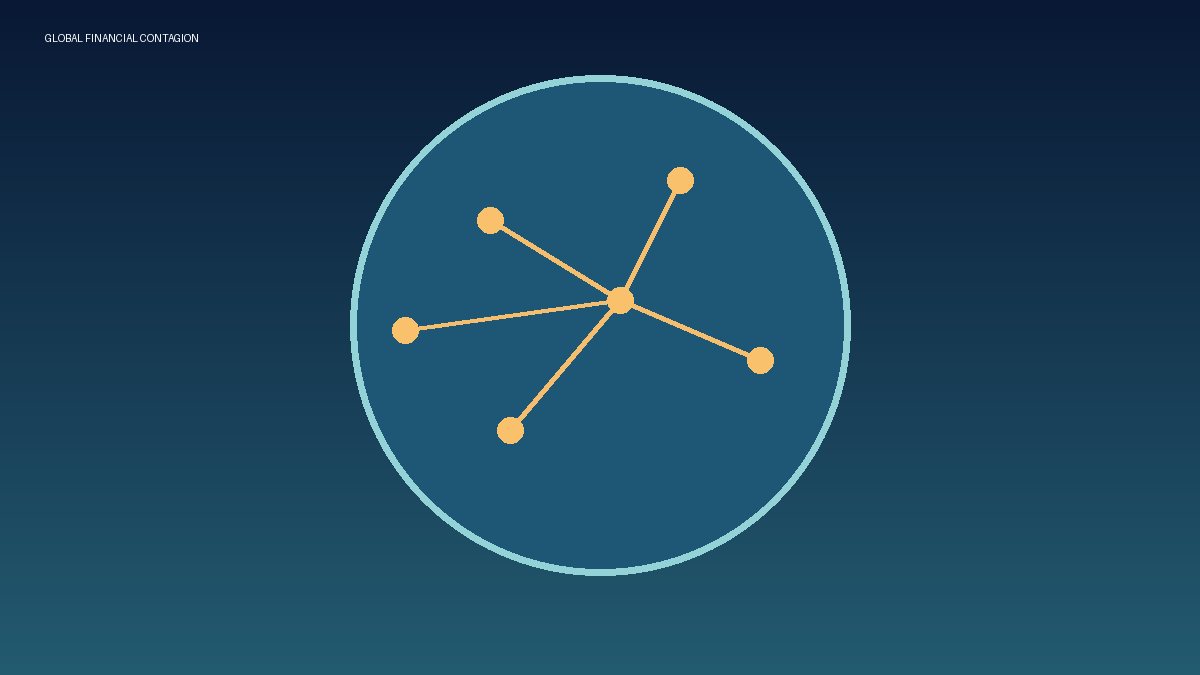
That does not mean a market correction will inevitably become a banking crisis. The IMF’s assessment is that the global banking system remains broadly resilient overall, although pockets of vulnerability persist. The important issue is whether market losses remain manageable or interact with leverage, funding pressures and operational disruptions in ways that amplify stress.
What Investors Are Watching Now
Investors are likely to focus on several signals over the coming weeks. First is the quality of corporate earnings. Companies need to demonstrate that revenue growth can support high levels of investment associated with AI and other technology themes. Second is the direction of bond yields and inflation expectations, which influence the discount rates used to value future profits.
Third is market breadth. If gains and losses are concentrated in a small group of large companies, the headline performance of an index may not reflect the wider market. A healthier advance generally involves participation from a broader range of sectors and companies. Fourth is liquidity: investors will watch whether trading remains orderly and whether credit markets continue to function smoothly during periods of stress.
Reuters’ November 11 assessment of the recent technology selloff noted that positioning, stock correlations, options activity and technical trends were among the indicators analysts were monitoring. Some measures suggested crowded exposures had been reduced, but other signals did not yet confirm a decisive market bottom. This is a reminder that short-term market direction is difficult to establish from one indicator.
What Could Reduce the Risk of a Deeper Selloff?
For companies, the strongest defence is credible financial performance. Businesses that communicate realistic investment plans, maintain sound balance sheets and show measurable returns are better placed to retain investor confidence. For policymakers, priorities include maintaining price stability, keeping public debt on sustainable paths, monitoring leverage outside the banking system and strengthening cyber resilience.
Regulators also need to understand how risks move through modern markets. Stress tests should consider not only individual institutions but also common exposures, crowded trades and the possibility that several investors may try to sell similar assets at the same time. Better data on non-bank finance can help authorities identify vulnerabilities before they become systemic.
For individual investors, market turbulence is a reason to revisit risk tolerance, diversification, liquidity needs and investment time horizons—not to assume every decline is either a bargain or the start of a catastrophe. Concentrated portfolios and borrowed money can make volatility especially damaging. Decisions should be based on personal circumstances and reliable financial advice rather than panic or social-media predictions.
Conclusion: Nervous Markets Are a Warning, Not a Forecast
Global stock-market turmoil reflects a collision between optimism and uncertainty. AI investment offers the possibility of significant productivity gains, but its commercial returns must justify the capital being committed. Higher bond yields can challenge equity valuations, while geopolitical shocks, leverage and cyber threats may amplify market stress.
The recent selloff should therefore be understood as a warning about the assumptions embedded in financial prices, not as proof that a global crash is inevitable. Markets can recover when earnings remain strong, inflation eases and uncertainty declines. They can also remain volatile if investors continue to question valuations and the sustainability of growth.
The most important lesson is that financial resilience depends on more than rising share prices. It requires transparent companies, sustainable public finances, well-supervised financial institutions and investors who understand the risks they are taking. In an interconnected world, confidence can move quickly—but sound fundamentals and credible policies remain the foundations of lasting market stability.
Next Article :Asia’s Semiconductor Boom: How AI Reshaping the Global Economy
For more Information About Click The blue name of Global Economic Information