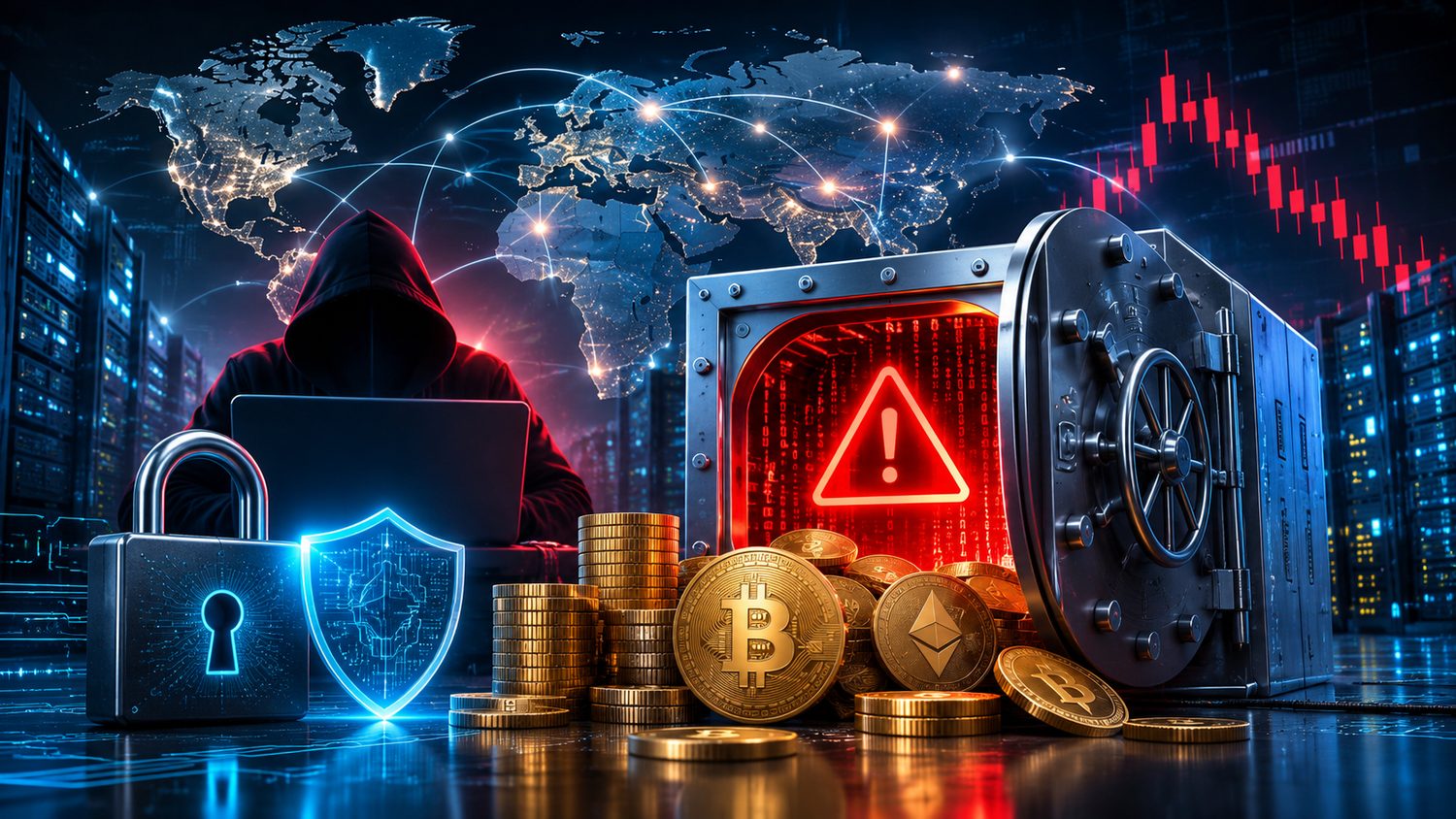
Binance Hack: What the $6.3 Billion Crypto Breach Means for Global Markets
Analysis | Economy Earth Planet | 14 November 2026
A reported $6.3 billion cryptocurrency theft from Binance has renewed urgent questions about exchange security, investor confidence and the safeguards needed as digital assets become more connected to the global financial system.
A record-scale incident puts crypto security under scrutiny
Binance, the world’s largest cryptocurrency exchange by trading activity, faced a major security incident in late October 2026. News reports citing the exchange and blockchain investigators put the value of cryptocurrency stolen at approximately $6.3 billion, a figure that could make the event one of the largest digital-asset thefts on record. The final accounting and technical investigation may evolve as investigators trace funds across multiple blockchains.
The reported scale matters beyond one company. Centralized exchanges hold or manage large amounts of customer assets and provide the infrastructure through which millions of people buy, sell and transfer tokens. A serious breach can therefore affect not only direct users but also market prices, trading activity, counterparties and public confidence in the wider crypto ecosystem.
How did the attack reportedly happen?
Early reporting described a complex compromise involving internal systems used to authorize transactions. Binance initially said investigators were examining a potentially compromised employee laptop, then indicated that the investigation had identified additional points of breach. Blockchain analysis firms reported that attackers were able to exploit transaction-signing infrastructure and move assets from an internet-connected hot wallet.
A hot wallet is connected to online systems so that an exchange can process withdrawals and routine transfers quickly. That convenience also creates a security challenge: if an attacker compromises the systems that approve transactions, they may be able to abuse legitimate processes. The precise chain of events remains subject to investigation, so early explanations should not be treated as a complete forensic finding.
Authorities and blockchain analytics companies have linked the incident to a North Korean state-sponsored hacking unit known as TraderTraitor. Attribution in cyber investigations depends on technical evidence and intelligence, and should be distinguished from a court finding. Binance and law-enforcement agencies have been involved in efforts to investigate the breach and trace the funds.
What happened to customer funds?
Binance said it would cover the financial impact of the incident rather than pass the losses on to customers. Reuters reported that the company set aside more than $6.34 billion in company resources to address the fallout, including assets already held and funds used to replace stolen tokens. Binance and industry partners also worked to freeze assets that could be identified and immobilized, particularly tokens whose issuers can freeze balances.
Freezing assets is not the same as recovering every stolen token. Some cryptocurrencies can be frozen by their issuers under specific conditions, while other assets may be moved through multiple wallets or decentralized services. Tracing funds across public blockchains can provide clues, but recovering them depends on cooperation, technical capabilities and, in many cases, law-enforcement action.
Customers should distinguish between the reported gross value stolen, assets frozen or traced, and the amount the exchange says it has replaced or set aside. Those are different figures and may change as the investigation progresses. The headline number alone does not mean that every customer lost funds permanently.
Market confidence and the wider economic impact
Crypto markets are highly sensitive to trust. When a major exchange suffers a breach, investors may reduce exposure, move assets to other platforms or transfer tokens to personal wallets. Such reactions can increase short-term volatility and place pressure on exchanges to demonstrate that withdrawals, custody systems and reserve disclosures remain reliable.
Reuters reported that Binance experienced substantial customer withdrawals after services resumed, although the outflows represented a relatively small share of assets held on the platform. That response suggests investors can react quickly to security news while also weighing an exchange’s ability to meet withdrawals and replace losses.
The incident also drew attention from traditional financial institutions. As banks, payment providers and investment firms become more connected to digital assets, weaknesses at a crypto platform can prompt broader reviews of operational and cybersecurity risk. The direct impact on the traditional banking system is not automatic, but the episode illustrates why regulators and financial institutions monitor links between crypto markets and conventional finance.
What exchanges should learn from the breach
Security is not only a question of building a stronger digital wall. Exchanges need layered controls that limit the damage if one employee device, credential or internal service is compromised. These can include separating transaction approval from routine workstation access, requiring multiple independent approvals for large transfers, using hardware-backed signing systems, and applying strict limits to hot-wallet balances.
Monitoring and response also matter. Automated alerts can flag unusual withdrawal patterns, while circuit breakers can temporarily pause transactions when risk thresholds are crossed. Regular independent audits, penetration testing, staff training against social engineering and clear incident communication can help detect weaknesses before they become catastrophic.
Proof-of-reserves disclosures can help customers understand whether reported assets are present, but they are not a substitute for a full assessment of liabilities, governance, operational controls and cybersecurity. Users and regulators need to evaluate the entire system rather than rely on one metric.
Practical steps for cryptocurrency users
Individual users cannot control an exchange’s internal systems, but they can reduce account-level risks. Use a unique password and a passkey or authenticator-based multi-factor authentication where available. Secure the email account linked to an exchange, review active sessions and API permissions, and revoke access that is no longer needed. Be cautious of messages claiming to offer compensation or recovery services; scammers often exploit the confusion following a high-profile breach.
Users should verify updates through the exchange’s official website or app rather than links in social media posts or unsolicited messages. Never disclose a seed phrase, password or one-time code to someone claiming to be support staff. For larger holdings, consider whether keeping every asset on a single exchange matches personal risk tolerance and technical experience; self-custody brings its own responsibility, including the risk of losing recovery keys.
Nex Artikel :