Europe’s Economic Challenge: Can the EU Overcome Inflation and Slow Growth?
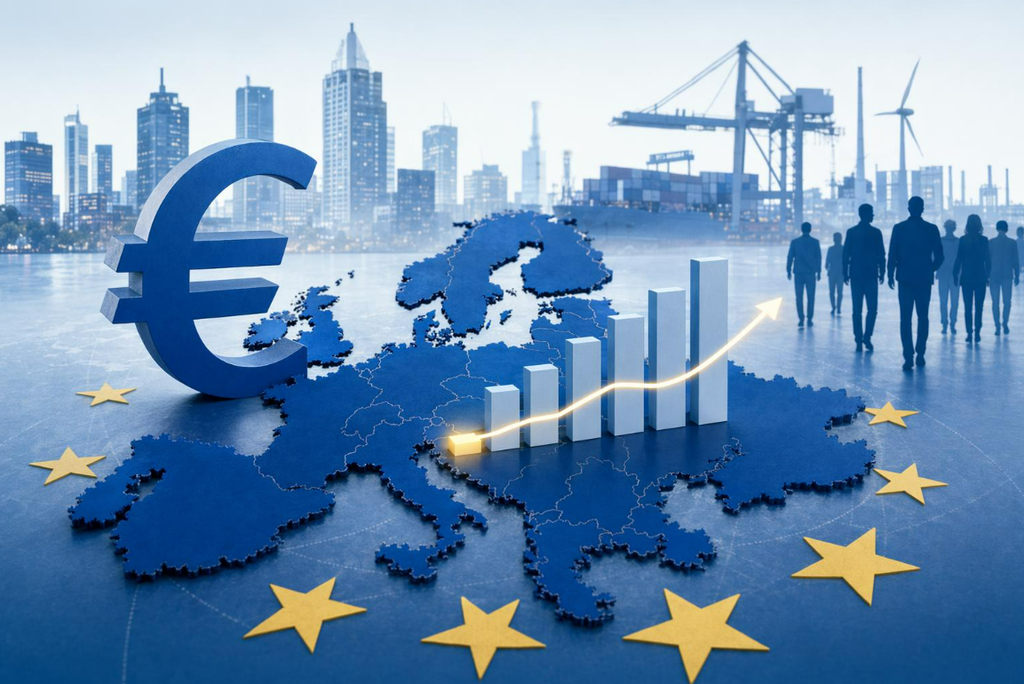
Europe’s economy is showing resilience, but its recovery remains fragile. Growth has continued despite expensive energy, geopolitical uncertainty and pressure on household budgets. Yet the region faces a difficult combination: businesses need affordable power and investment to remain competitive, consumers need relief from high prices, and central banks must prevent inflation from becoming entrenched without unnecessarily weakening activity.
The latest data offer a mixed picture. Eurostat’s preliminary estimate published on 30 October 2026 showed that gross domestic product (GDP) increased by 0.4% quarter on quarter in the euro area and 0.5% in the European Union during the third quarter. Compared with a year earlier, growth was 1.3% in the euro area and 1.5% across the EU. These figures suggest continued expansion, not a region-wide recession, but the pace is modest and the estimates may be revised.
At the same time, energy costs remain a major source of uncertainty. Euro-area inflation rose to 3.8% in September, according to the flash estimate reported by Reuters, driven largely by energy and food costs. The European Central Bank (ECB) is therefore navigating a difficult policy environment in which higher energy prices can push inflation up while simultaneously reducing household purchasing power and business output.
A Recovery That Is Growing, but Not Quickly
Europe’s recent performance challenges the idea that the region is already in a deep downturn. Eurostat’s third-quarter estimate showed positive growth in both the euro area and the wider EU. Reuters also reported that investment in artificial intelligence, defence and infrastructure, alongside household consumption and foreign demand, helped support activity.
However, aggregate growth can hide major differences between countries and industries. Some economies benefit from stronger services, tourism or technology investment, while energy-intensive manufacturers face much higher operating costs. A positive regional average does not mean every household or company is experiencing an improvement.
The distinction matters for policymakers. If the problem were simply weak demand, broad stimulus might be appropriate. But when the economy is being constrained by expensive energy, supply risks and structural competitiveness problems, demand support alone cannot solve the underlying weaknesses. Europe needs both macroeconomic stability and measures that expand productive capacity.
Inflation and the Cost-of-Living Pressure
Inflation remains one of the most visible challenges for European households. Even when the rate of price increases slows, the overall price level usually does not return to where it was before the inflation shock. Families can therefore continue to feel squeezed after headline inflation has started to decline.
The September 2026 euro-area inflation reading of 3.8% was higher than the previous month’s 3.2%, with energy and food contributing to the increase. The jump illustrates how quickly a new supply shock can complicate the outlook. Higher fuel and electricity costs affect household bills directly, but they also raise the costs of transport, logistics, fertilisers, packaging and industrial production.
For lower-income households, the impact can be particularly severe because energy and food take up a larger share of their budgets. Governments face pressure to provide support, but poorly targeted subsidies can be costly, weaken incentives to save energy and benefit households that do not need assistance. Temporary, focused support is generally more sustainable than broad price suppression.
Energy Security: The Structural Weakness Europe Must Address
Europe’s exposure to imported energy has made geopolitical developments a central economic issue. Conflict in and around the Middle East can disrupt production and shipping routes, lift oil and gas prices and increase uncertainty about future supply. Even when physical shortages do not occur, volatility can make it harder for businesses to plan investment and manage costs.
The European Commission’s Spring 2026 Economic Forecast described an energy shock that was expected to weaken growth and raise inflation. Its baseline projected EU GDP growth of 1.1% in 2026, down from 1.5% in 2025, while EU inflation was forecast to reach 3.1% in 2026. These were spring projections, not final outcomes; subsequent data and the Commission’s autumn forecast may alter the estimates.

The long-term response cannot rely on one energy source. Europe needs a more diverse and reliable system combining renewables, storage, grid connections, flexible generation and efficiency improvements. Faster permitting and cross-border infrastructure can help move electricity to where it is needed. The transition must also be practical: factories cannot remain competitive if energy supply is unreliable or consistently more expensive than that available to overseas rivals.
The ECB’s Difficult Balancing Act
The ECB’s task is complicated because energy shocks create both inflationary and contractionary effects. Higher fuel prices push headline inflation upward, but they also reduce real incomes and raise production costs. Raising interest rates can help prevent the shock from spreading into wages and broader prices, yet it cannot produce more energy or repair disrupted supply chains.
Reuters reported on 5 November 2026 that the ECB had kept its key deposit rate at 2.5% and was assessing incoming data to determine whether another increase might be needed. ECB chief economist Philip Lane said on 10 November that the policy outlook would depend on how far higher fuel costs spread into wages and other prices. The distinction between a temporary energy-driven increase and persistent underlying inflation is crucial.
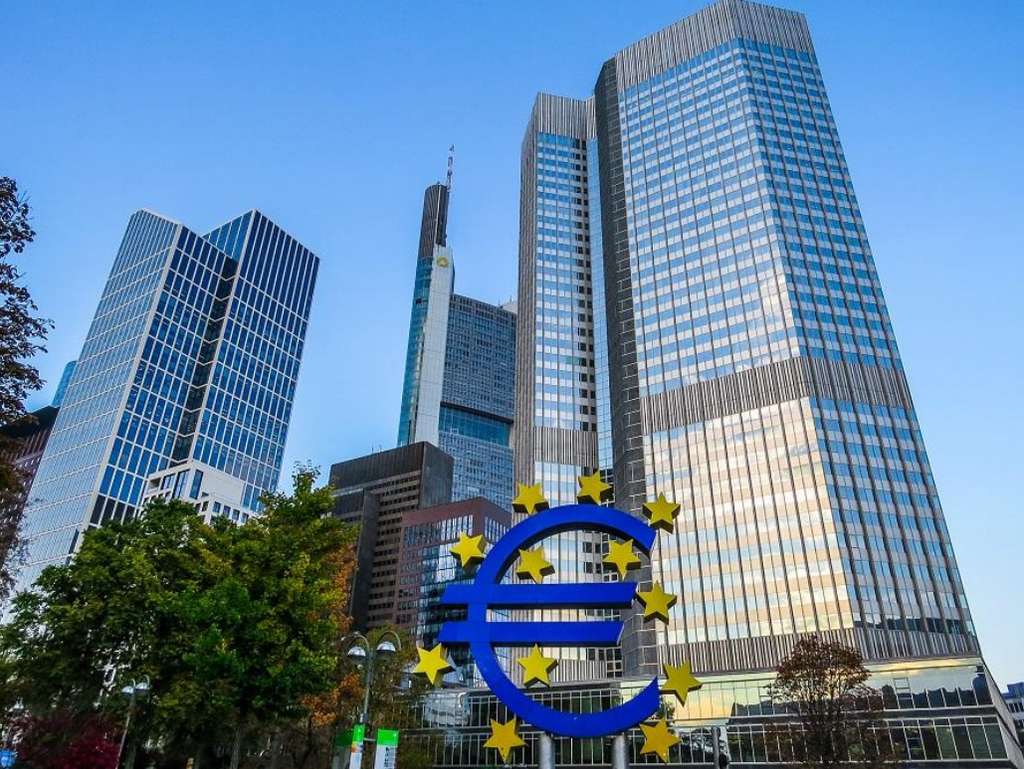
If central banks react too aggressively to a temporary supply shock, borrowing costs may rise unnecessarily and weaken housing, investment and employment. If they respond too slowly to persistent inflation, households and businesses may begin to expect prices to keep rising, making the problem harder to reverse. Clear communication and decisions based on a broad set of data are therefore essential.
Can European Industry Compete Globally?
Europe’s industrial base remains a major source of technology, exports, skilled employment and economic security. But manufacturers face pressure from high energy costs, complex regulation, slower investment and intense competition from the United States and China. Industries such as chemicals, metals, automotive manufacturing and machinery are particularly sensitive to energy prices and capital costs.
Competition is not only about wages or subsidies. It also depends on access to affordable electricity, research funding, skilled workers, efficient transport, predictable regulation and large markets. If firms believe that building a new facility in Europe will take longer or cost substantially more than elsewhere, they may direct future investment to another region.

Europe’s response should not be limited to protectionism. Trade-defence measures may be justified when competition is distorted, but broad barriers can raise input costs for European companies that depend on imported components. A stronger strategy would combine fair trade rules with investment in research, infrastructure, workforce training and faster commercialisation of new technologies.
AI and Infrastructure: An Opportunity for New Growth
Artificial intelligence offers one potential source of productivity growth. Investment in data centres, semiconductors, cloud infrastructure and software can support construction, engineering and high-value services. European firms can also use AI to improve logistics, reduce downtime, manage energy consumption and accelerate research.
However, buying technology is not the same as transforming productivity. Businesses need reliable digital infrastructure, access to computing capacity, appropriate skills and incentives to redesign their operations. Smaller firms may struggle to finance adoption or recruit specialists. Public policy can help by supporting training, research partnerships and competitive digital markets rather than simply subsidising headline projects.
AI also creates risks. If expected returns fail to materialise, investment could slow and valuations could adjust. Europe should pursue the technology as a long-term productivity opportunity, not assume that every AI-related investment will generate immediate profits.
Public Finances and the Limits of Government Support
Governments are being asked to fund energy relief, defence, infrastructure, industrial policy and social services at the same time. Yet higher interest costs and existing debt burdens limit the room for permanent new spending. The European Commission’s spring forecast warned that subdued activity, higher interest expenditure and support measures could put additional pressure on public deficits.
The answer is not identical across all member states. Countries with stronger fiscal positions may have more flexibility, while highly indebted governments need credible medium-term plans. Across the EU, spending should be assessed by whether it improves resilience and future productivity. Well-designed grid upgrades, transport links, education and research can produce lasting benefits; open-ended subsidies may simply postpone difficult adjustments.
What Europe Needs to Do Next
First, accelerate energy-system investment while keeping reliability and affordability central to the transition. Second, deepen the single market so that companies can operate and scale across borders with fewer unnecessary barriers. Third, improve access to finance for innovative firms and ensure that research can move from laboratories into commercial production.
Fourth, invest in people. Technical education, apprenticeships, adult retraining and digital skills are essential if workers are to benefit from industrial change rather than be displaced by it. Finally, policymakers should preserve predictable rules. Businesses are more likely to invest when they can plan around stable energy, tax, trade and regulatory frameworks.
Conclusion: Europe’s Challenge Is to Turn Resilience into Competitiveness
Europe’s economy is still expanding, but the latest figures show why policymakers cannot be complacent. Growth remains modest, inflation has been pushed higher by energy and food costs, and the ECB must guard against persistent price pressure without unnecessarily damaging activity. Meanwhile, industrial firms face a global competition in which energy, technology, skills and investment all matter.
The region does not need to choose between climate transition, industrial strength and economic stability. It needs policies that make these goals reinforce one another: reliable clean energy, competitive markets, productive investment, skilled workers and disciplined public finances. Europe’s economic future will depend less on short-term rescue measures than on its ability to make the continent a place where businesses can innovate, produce and grow.