Global Economic Slowdown: Why the IMF Warns of a More Uncertain Future

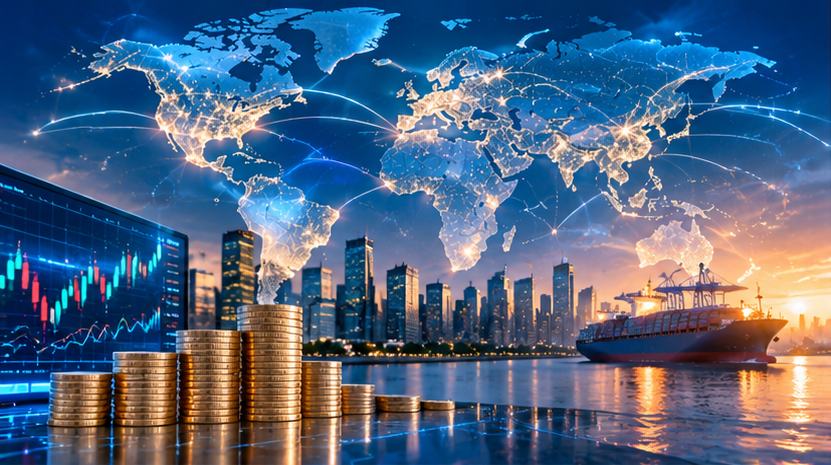
The global economic outlook is becoming more uneven. In its October 2026 World Economic Outlook, the International Monetary Fund (IMF) projects global growth of 3.1% in 2026, followed by a modest improvement to 3.4% in 2027. The Fund also expects global headline inflation to rise to 4.7% in 2026 before easing to 4.1% in 2027.
These forecasts do not describe a worldwide recession. They point instead to an economy that continues to expand, but at a slower pace than in 2025 and with increasingly unequal outcomes across countries. Some economies benefit from technology investment and stronger domestic demand. Others are more exposed to expensive energy, fragile public finances, trade disruptions and limited policy room.
The central question is not simply whether global growth will slow. It is why resilience is becoming harder to sustain, which economies are most exposed, and what governments can do to prevent a period of uncertainty from turning into a deeper loss of opportunity.
What the IMF Is Forecasting
The IMF’s October report, titled Resilience Under Strain, Urgent Choices, estimates global growth at 3.1% for 2026 and projects 3.4% for 2027. Global headline inflation is expected to average 4.7% in 2026 and decline to 4.1% in 2027. These are global aggregates: individual countries and regions can perform very differently.
The IMF notes that its main estimates and projections are based on statistical information available through October 1, 2026. Forecasts are conditional assessments, not guarantees. New conflicts, policy changes, energy-price movements or financial-market shocks can alter the outlook after the report’s information cut-off.
It is also important to distinguish slower growth from falling output. If the global economy grows by 3.1%, it is still expanding; it is simply doing so at a less rapid rate. A recession generally refers to a sustained contraction in economic activity, not merely a decline in the growth rate.
Why Global Growth Is Under Pressure
The IMF identifies several forces that could weaken economic activity. Geopolitical conflicts can disrupt energy supplies and shipping routes, raising costs for businesses and households. Renewed trade tensions can discourage investment, complicate supply chains and make it harder for companies to plan production across borders.
At the same time, elevated public debt and rising financing costs can restrict governments’ ability to respond to shocks. Countries that must spend more on interest payments have less room to fund infrastructure, education, health services or targeted assistance. When fiscal buffers are thin, even a temporary shock can become more difficult to manage.
There are also positive forces. Investment in artificial intelligence and other technologies can support trade, business spending and productivity. But those gains are not evenly distributed. Countries with skilled workers, reliable electricity, strong digital infrastructure and access to technology supply chains may benefit more than economies that lack those foundations.
Geopolitical Conflict and the Cost of Energy
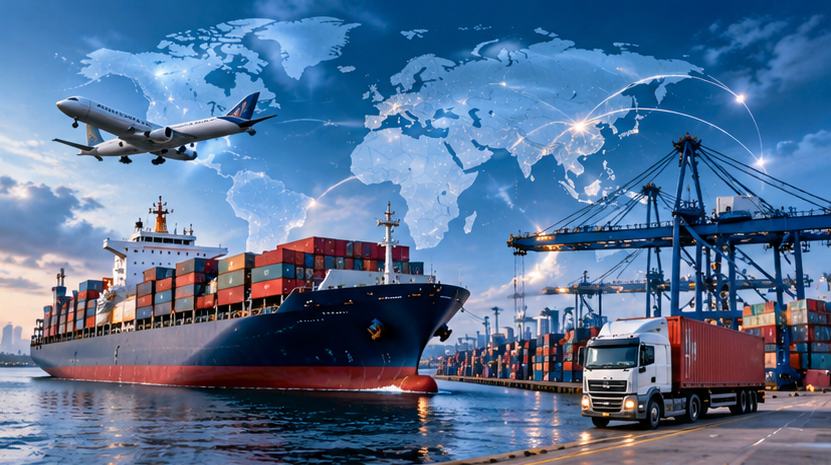
Energy is an essential input for transport, manufacturing, electricity generation and food production. When conflict disrupts oil and gas supply or threatens important shipping corridors, the effects can travel through the entire economy. Higher fuel prices raise freight and production costs; those costs may eventually reach consumers through more expensive goods and services.
Energy-importing economies are particularly exposed. They may face a larger import bill, pressure on their currencies and more difficult choices for central banks. Governments can try to cushion households, but broad and prolonged subsidies can become expensive and may benefit higher-income consumers as well as those most in need.
Energy exporters can receive higher revenues when global prices rise, but this does not mean every exporter benefits equally. Production disruptions, domestic fuel subsidies, weak infrastructure or a narrow tax base can limit the gains. A commodity windfall is most useful when it is managed transparently and invested in long-term resilience.
Trade Tensions: A Drag on Investment and Productivity
International trade allows countries to specialise, reach larger markets and access inputs that may not be available domestically. Tariffs, export controls and unpredictable trade rules can weaken these benefits. Businesses may postpone investment while they wait to understand future market access, regulatory requirements and supply-chain costs.
Some firms respond by diversifying suppliers or moving parts of production to new locations. This can create opportunities for countries that offer reliable infrastructure and a stable business environment. However, shifting supply chains is not cost-free. New facilities require capital, trained workers, logistics networks and time to reach efficient scale.
For policymakers, the challenge is to strengthen resilience without creating unnecessary barriers. Predictable rules, transparent customs procedures and cooperation on standards can make supply chains more robust while preserving the gains from international trade.
Inflation Remains a Difficult Policy Challenge
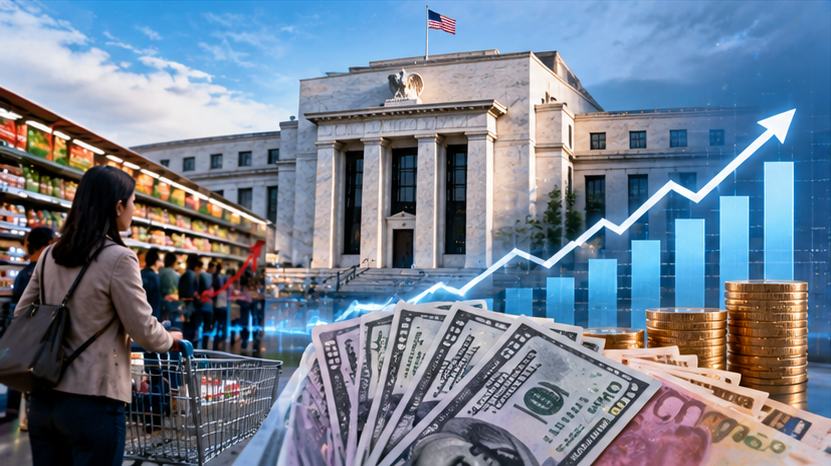
The IMF projects global headline inflation at 4.7% in 2026, easing to 4.1% in 2027. A global average can conceal very different national experiences. Countries with weaker currencies or high dependence on imported food and fuel may experience more persistent price pressure than economies with stronger domestic supply.
Central banks face a difficult balance. If they raise interest rates too aggressively, borrowing becomes more expensive for households and firms, potentially slowing investment and employment. If they ease policy too quickly while inflation remains persistent, price expectations may become harder to control.
Monetary policy cannot produce more oil, repair a blocked port or restore a damaged harvest. It can, however, help prevent temporary supply shocks from becoming embedded in broader inflation. Credible communication and consistent policy frameworks are therefore important, especially when households and businesses are already uncertain.
Why Public Debt Limits the Government Response
Many governments entered this period with substantial debt and significant spending commitments. Higher interest costs can absorb a growing share of public revenue, leaving less room to respond to new emergencies or invest in future growth.
The IMF argues that rebuilding fiscal space is urgent. This does not mean every country should cut spending immediately or in the same way. The appropriate path depends on debt sustainability, economic conditions, social needs and the credibility of the government’s medium-term budget plan.
When cost-of-living pressures require support, the IMF’s analysis favours temporary, targeted income assistance for vulnerable households over broad measures that suppress prices. Targeted help can protect people who need it while preserving incentives to conserve scarce resources and limiting the long-term cost to public budgets.
Artificial Intelligence: A Source of Growth and a New Risk
AI-related investment is one of the forces supporting global activity. Spending on data centres, semiconductors, software and digital infrastructure can increase demand and potentially improve productivity. Firms may use AI to automate routine tasks, support research, improve logistics and develop new products.
But the economic benefits are not automatic. Productivity gains depend on how widely businesses adopt the technology, whether workers receive appropriate training and whether organisations redesign processes to use it effectively. Investment may be concentrated in a relatively small group of firms and countries, leaving others with fewer gains.
The IMF also identifies a reassessment of AI expectations as a downside risk. If expected returns fail to materialise, financial markets could reprice technology assets, investment plans could be reduced and the positive contribution from the technology cycle could weaken. This is not a prediction that an AI crash will occur; it is a risk scenario that deserves attention.
Which Economies Are Most Vulnerable?
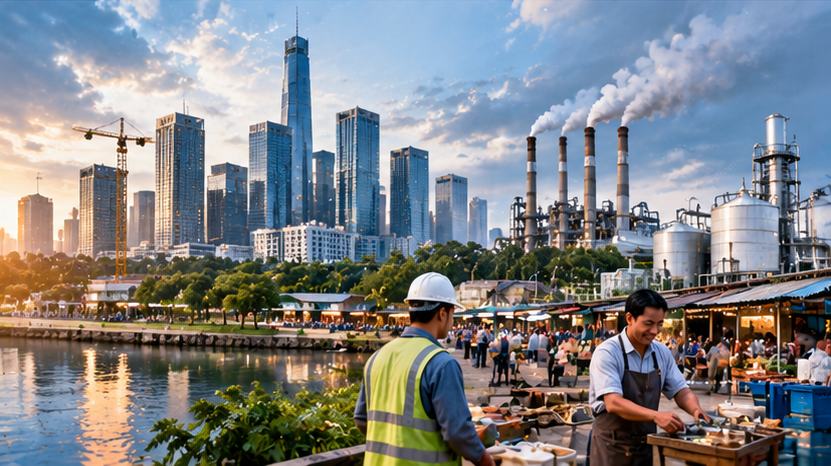
There is no single profile of a vulnerable economy. Countries that import large amounts of energy, have high external financing needs, carry substantial public debt or rely on a narrow range of exports may be more exposed to shocks. Weak institutions and limited foreign-exchange reserves can make adjustment harder.
Emerging markets can face additional pressure when global investors become more cautious. Capital outflows may weaken currencies and raise the cost of borrowing. Governments and central banks then have to balance financial stability, inflation control and support for economic activity.
However, emerging economies are not simply passive victims of global conditions. Countries with sound macroeconomic frameworks, diversified exports, credible institutions and strong domestic markets can remain resilient. Regional trade and investment links can also create new opportunities when global supply chains are reorganised.
What the Outlook Means for Asia and Indonesia
Asia’s outlook is mixed because the region combines energy importers, energy exporters, manufacturing hubs and economies integrated into the technology supply chain. Countries that produce semiconductors and provide advanced components may benefit from AI-related demand. Economies that depend heavily on imported fuel or face weak external balances may experience greater pressure.
For Indonesia, the key variables include global commodity prices, the rupiah, domestic consumption, investment confidence and the cost of imported energy and industrial inputs. Strong demand for selected exports can support revenues, while higher import costs can squeeze businesses and households. The net effect depends on the composition of trade and the government’s policy response.
Indonesia can strengthen its resilience by improving productivity, investing in transport and energy infrastructure, expanding workforce skills and maintaining predictable regulations. Diversifying export markets and developing higher-value domestic industries can reduce dependence on a narrow range of commodities.
What Governments and Businesses Should Do
Governments should preserve credible monetary and fiscal frameworks, rebuild budget buffers where needed and protect vulnerable households through well-targeted support. They can also reduce supply-side bottlenecks by investing in energy reliability, ports, transport, education and digital infrastructure.
Businesses should test their exposure to higher input costs, currency movements, shipping delays and weaker demand. Diversifying suppliers, improving energy efficiency and maintaining disciplined balance sheets can help firms withstand volatility. Investment decisions should be based on realistic cash-flow assumptions rather than optimistic forecasts alone.
International cooperation remains important. Shared standards, reliable trade channels, debt transparency and coordinated responses to cross-border shocks can reduce uncertainty. No country can fully insulate itself from a connected global economy, but sound domestic policy can make the impact of shocks less severe.
Conclusion: Slower Growth Is a Warning, Not a Verdict
The IMF’s October 2026 outlook describes a global economy that is still growing but facing a more difficult environment. Growth is projected at 3.1% in 2026 and 3.4% in 2027, while inflation is expected to remain elevated before easing. Conflict, trade uncertainty, fiscal vulnerabilities and uneven access to technology are creating different outcomes across countries.
The most important lesson is that resilience cannot rely on short-term fixes alone. Governments need credible policies and room in their budgets; businesses need adaptable supply chains and disciplined investment; workers need skills that match changing technology and production patterns.
A global slowdown is not inevitable, and the IMF’s forecasts are not a fixed outcome. The decisions made by policymakers, companies and international institutions will influence whether the current period of strain becomes a temporary adjustment or a longer phase of weaker growth.