Global Commodity Prices Surge: Who Wins and Who Loses in the Changing World Economy?

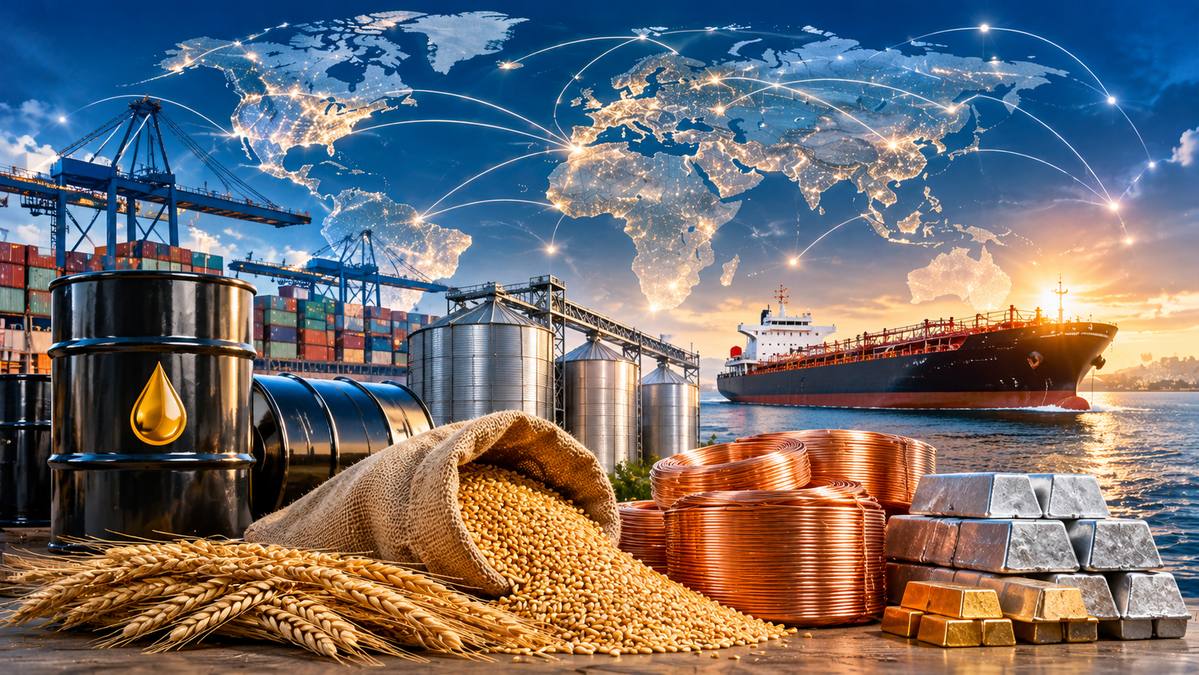
Global commodity prices are set to rise sharply in 2026, according to the World Bank’s October Commodity Markets Outlook. The bank forecasts a 23% increase across its broad commodity price index this year. Energy prices are projected to climb 32%, while metals and minerals are expected to rise 25%. Food commodity prices are forecast to increase by about 10% in 2026 and a further 7% in 2027.
The forecast reflects a combination of geopolitical conflict, disrupted shipping routes, constrained energy supplies, weather risks and strong demand for selected industrial materials. These forces do not affect every commodity in the same way. Oil, fertilizer, wheat, copper and gold each respond to different supply and demand conditions. Yet their markets are connected through transport, production costs, investment and consumer prices.
The headline forecast deserves attention, but it needs careful interpretation. It is an annual projection, not a claim that every commodity rose by 23% in one month or that every household will face a 23% increase in costs. The World Bank also reported that several non-energy commodity groups fell in October. This contrast shows why readers should distinguish a full-year forecast from short-term monthly price movements.
Why the World Bank Expects Commodity Prices to Rise
The World Bank points to several shocks arriving at the same time. Conflict in the Middle East has disrupted energy production and shipping. Grain shipments through the Black Sea face risks linked to the Russia-Ukraine war. A strong El Niño could affect harvests in several agricultural regions. Higher fuel and fertilizer costs can also make food production more expensive.
When these pressures overlap, the impact can spread beyond the original market. Higher oil prices raise transport and manufacturing costs. Expensive natural gas can affect electricity and fertilizer production. More costly fertilizer can then feed into farm expenses, while shipping disruptions can delay food deliveries and reduce the supply available to importers.
Energy: The Biggest Driver of the 2026 Forecast
The World Bank expects energy prices to rise 32% in 2026. It forecasts Brent crude oil to average around $91 per barrel for the year, compared with $69 in 2025. The report links the increase to lower oil inventories and a projected 5.2% fall in global oil supply.
Higher energy prices can create a chain reaction. Airlines, shipping companies, truck operators and manufacturers may pay more for fuel. Some firms absorb these costs, while others pass them on to customers. If price increases spread across many goods and services, central banks may face a harder task in controlling inflation.
However, the outlook is not one-directional. The World Bank expects energy prices to ease in 2027 if supply conditions improve. Its baseline forecast assumes that conflicts affecting commodity supplies do not intensify significantly. A deeper disruption could push prices higher than the central projection.
Food and Fertilizer: The Risk to Household Budgets
Food commodity prices are projected to rise about 10% in 2026 and another 7% in 2027. The World Bank identifies disrupted grain shipments, El Niño risks and higher input costs as important factors. Fertilizer prices are forecast to increase 14% in 2026, following a sharp rise in urea prices earlier in the year.
Food inflation is especially serious for low-income households. They often spend a larger share of their income on basic food and have less room to replace expensive products. Import-dependent countries can also face pressure when global grain, edible oil or fertilizer prices rise at the same time as their currencies weaken.
Yet global forecasts do not translate evenly into local supermarket prices. Domestic harvests, exchange rates, import rules, transport infrastructure, storage capacity and government policy all shape the final price paid by consumers. A country with strong local production and efficient distribution may be more resilient than one that relies heavily on imported staples.
Metals and Gold: Different Reasons for Higher Prices
Metal prices are expected to rise 25% in 2026, with aluminum, copper and tin reaching record levels in the World Bank’s outlook. Demand linked to renewable energy, electric vehicles and data centres supports some industrial metals. Supply disruptions can make the market tighter when mines, smelters or transport networks cannot respond quickly.
Precious metals follow a different pattern. The World Bank forecasts a 40% rise in precious metal prices in 2026, supported by demand for safe-haven assets during geopolitical and policy uncertainty. Investors may seek gold when they worry about financial instability, currency risk or international conflict.
These trends can create winners and losers. Mining companies may benefit from higher selling prices, but they can also face rising energy, labour and equipment costs. Manufacturers that use copper or aluminum may face more expensive inputs. Gold producers may gain revenue, while jewellery makers and consumers may pay more.
Who Wins and Who Loses?
Commodity-exporting countries can receive higher export revenues when prices rise. Governments may collect more royalties and taxes, while producers may increase investment. But the benefit depends on production volumes, contracts, exchange rates and the share of revenue that reaches the public budget.
Commodity-importing countries face the opposite risk. Higher oil, food and fertilizer bills can widen trade deficits and increase pressure on public finances. If governments subsidise fuel or food, they may protect consumers in the short term but increase fiscal costs. Poorly targeted support can also benefit wealthier households more than vulnerable families.
Producers are not guaranteed to win. A price increase caused by supply disruption may arrive alongside higher operating costs and weaker demand. Some exporters may also face infrastructure bottlenecks or political pressure to restrict domestic prices. The net impact depends on the structure of each economy.
What This Means for Indonesia and Other Emerging Economies
Indonesia has a mixed exposure to higher commodity prices. As a producer and exporter of several natural resources, it may benefit from stronger prices for selected commodities. At the same time, higher global energy, fertilizer or food costs can raise expenses for households, farmers and manufacturers.
The country’s outcome depends on which prices rise, how much it exports or imports, and how global movements affect the rupiah. Stronger export receipts can support foreign exchange earnings, but more expensive imported inputs can reduce the benefit. Policymakers must therefore assess each commodity separately rather than assume that a broad price increase is automatically good for the economy.
For Indonesia and other ASEAN economies, the long-term opportunity is to build more value at home. Better storage, ports, processing capacity, agricultural productivity, transparent mining rules and reliable energy systems can help countries capture more value while reducing exposure to supply shocks. Diversifying export markets can also reduce dependence on a small number of buyers.
Why the 23% Forecast Does Not Mean Every Price Is Rising Now
There is an important short-term detail. In its November 4 update on October market data, the World Bank said its energy price index rose 7.1% during October. However, its non-energy index fell 1.8%. Food prices declined 1.8%, metals fell 3.0%, and precious metals dropped 6.2% over the month.
This does not contradict the annual forecast. The 23% figure compares the projected average for 2026 with the previous year. Monthly data track shorter-term changes and can move in the opposite direction. A market may remain much more expensive on average over a year even after a monthly correction.
Readers should also remember that commodity indices combine many products. A decline in one metal does not mean every metal fell. A rise in crude oil does not mean all energy products moved by the same amount. Understanding the basket and the time period is essential when interpreting headline numbers.
Could Commodity Inflation Slow Global Economic Growth?
Higher commodity prices can weaken growth when they raise production costs and reduce household purchasing power. Businesses may delay investment, cut margins or pass higher costs to consumers. Central banks may keep interest rates higher if they believe price pressures will persist. That can make credit more expensive and reduce spending.
The risks are greatest when energy and food prices rise together. Energy is an input across the economy, while food is essential for households. If both become more expensive, families have less money for other purchases. Governments may also face pressure to expand subsidies or social assistance at a time when debt levels are already high.
Still, a commodity-price increase does not automatically cause a global recession. The effect depends on how long the shock lasts, whether wages and incomes adjust, how much supply can respond, and whether governments protect vulnerable groups without undermining fiscal stability.
What Governments and Businesses Should Do
Governments should improve early-warning systems for food and energy supply, maintain transparent trade rules and target support at households most exposed to price shocks. Strategic reserves can help manage temporary disruptions, but they cannot replace investment in reliable infrastructure and diversified supply.
Businesses can reduce vulnerability by reviewing supplier concentration, fuel exposure, inventory policies and currency risks. Long-term contracts and alternative sourcing may help, but companies should avoid costly overreaction to temporary price movements. Scenario planning is more useful than assuming that one forecast will occur exactly as published.
Emerging economies should invest in productivity, logistics, energy diversification and domestic processing. These policies can turn periods of strong commodity prices into lasting improvements rather than short-lived revenue gains.
Conclusion: A Price Shock With Unequal Consequences
The World Bank’s forecast of a 23% rise in global commodity prices in 2026 highlights how conflict, shipping disruption, weather and industrial demand can combine to reshape the world economy. Energy and fertilizer costs may feed into food prices, while metals demand reflects longer-term investment in technology and clean energy.
Some exporters may benefit, but import-dependent economies and low-income households face serious risks. Indonesia sits between these two positions: it can gain from selected exports while remaining exposed to higher costs for imported energy, food and industrial inputs.
The central lesson is that commodity wealth alone does not guarantee economic security. Countries need resilient supply chains, productive industries, sound public finances and well-targeted social protection. Those foundations determine whether a global price shock becomes an opportunity or a lasting burden.
Next Article :Asia’s Semiconductor Boom: How AI Reshaping the Global Economy
For more Information About Click The blue name of Global Economic Information